What does it really cost to use an AI model in late 2026? We added up every price on our board, so you don’t have to.
This is our first monthly snapshot. Each month we’ll compare against it, so changes in AI pricing show up in our own dated numbers.
How This Snapshot Was Made
- Scope: every text model on our price board on 2026-11-21. That’s 42 models from OpenAI, Anthropic, Google, Mistral AI, DeepSeek, xAI, Moonshot AI, Z.ai and MiniMax.
- Prices: standard list prices in US dollars per 1 million tokens, read from each provider’s official pricing page. Batch, caching and volume discounts are not applied. Our methodology page explains how prices are read and checked.
- Blended price: to compare models with one number, we weight input and output 3 to 1. That’s the same blend our price board uses: (3 × input + output) ÷ 4.
- Release dates: these come from the open models.dev database.
- Raw data: anyone can download the full table as a CSV file.
The Headline Numbers
| Measure (per 1M tokens) | Value |
|---|---|
| Models | 42 |
| Providers | 9 |
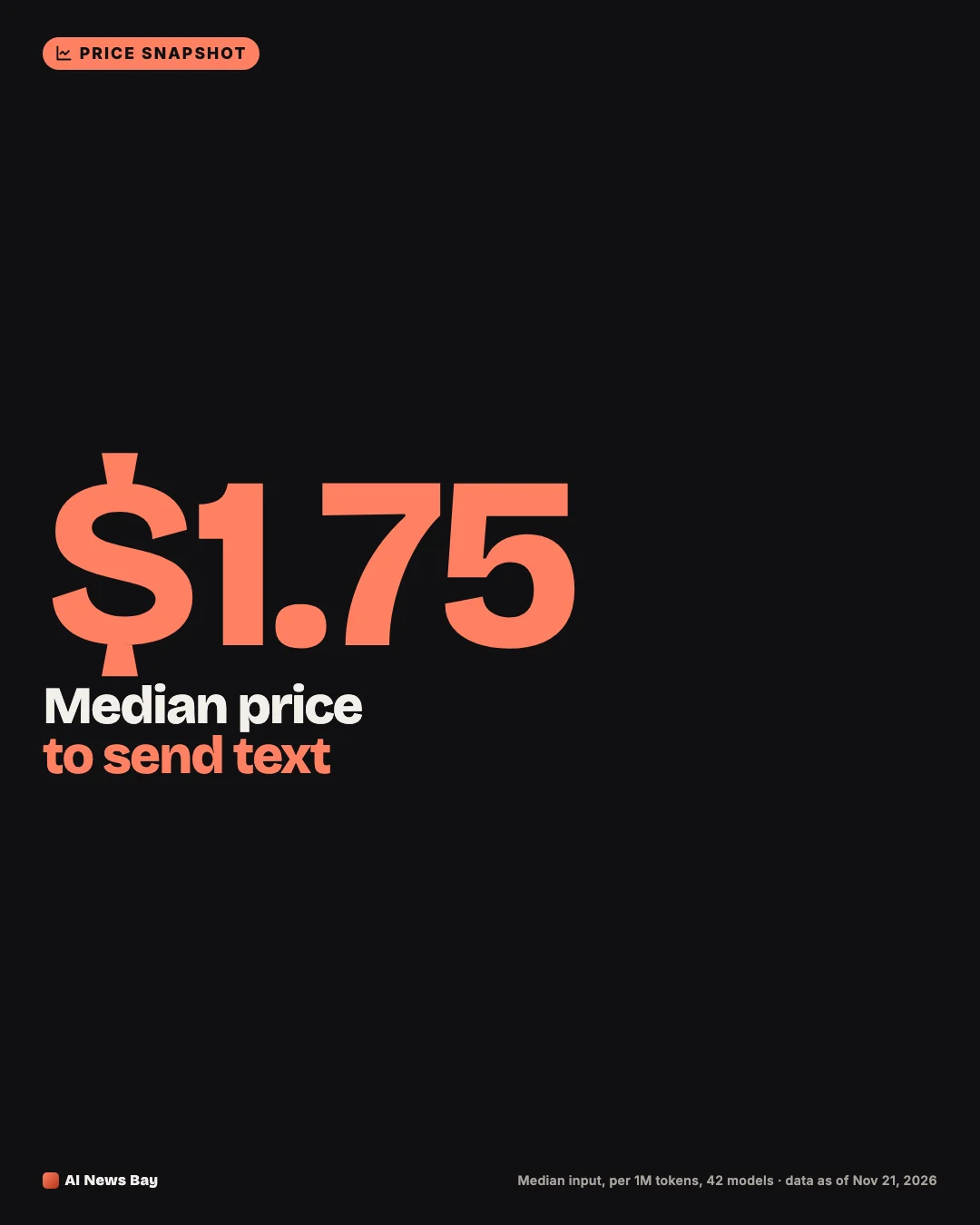
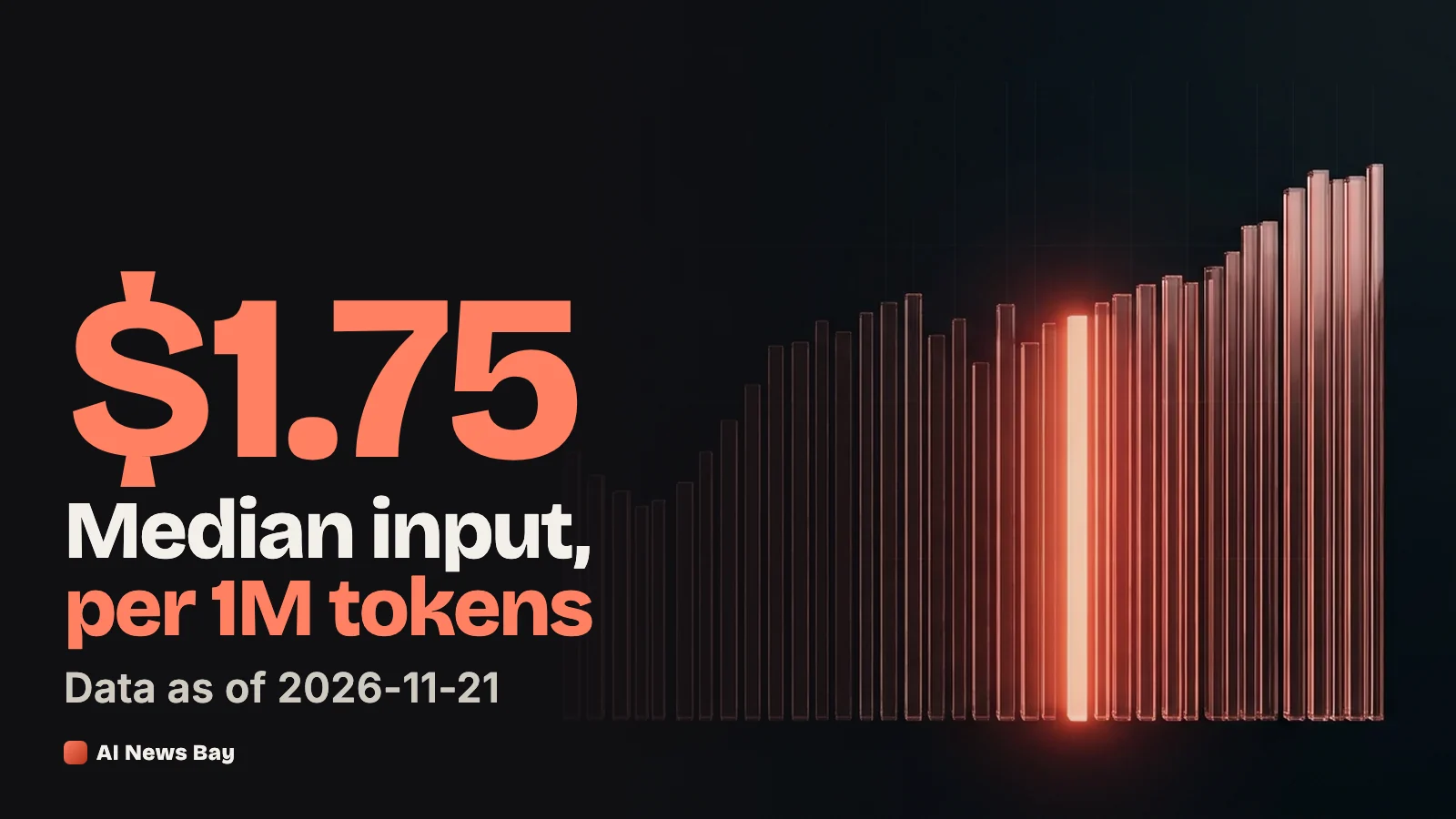
| Median input price | $1.75 |
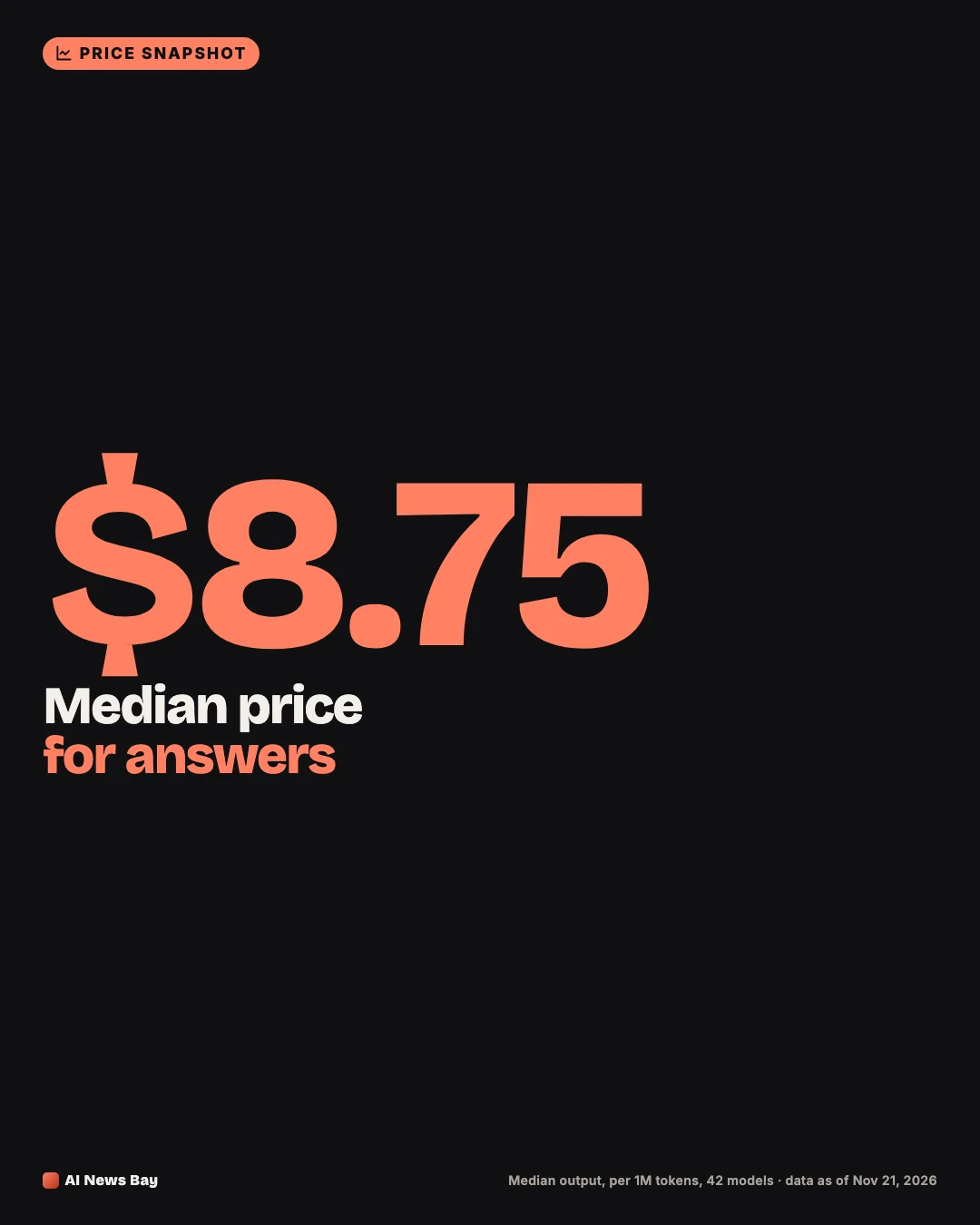
| Median output price | $8.75 |
| Median blended price | $3.22 |
| Cheapest blended price | $0.20 (Ministral 3 14B, GPT-6 Luna, Claude Haiku 5.5) |
| Most expensive blended price | $20.00 (GPT-6 Astra) |
The gap from the cheapest to the most expensive blended price is 100 times. In practice, the model you pick decides more about your bill than any other choice. Our article What Does One AI API Request Cost? shows what that means for real tasks.
How Prices Are Spread
Grouping the 42 models by blended price shows a market with a large budget tier and a small premium tier. Picture a supermarket aisle: a long shelf of budget brands, a busy middle shelf, and a short premium shelf at the end.
| Blended price per 1M tokens | Models |
|---|---|
| Under $0.50 | 8 |
| $0.50 to under $1 | 4 |
| $1 to under $2.50 | 7 |
| $2.50 to under $5 | 12 |
| $5 to under $10 | 6 |
| $10 and above | 5 |
Nineteen models, close to half, cost under $2.50 blended. The busiest band is $2.50 to $5, where many providers place their main mid-sized models. Only five models cost $10 or more: GPT-6 Astra, GPT-6.2 Astra, Claude Fable 5.2, GPT-5.5 and Claude Opus 5.
Output Costs About Five Times Input
At the median, output tokens cost 5 times as much as input tokens. That ratio varies a lot:
- Lowest: Ministral 3 14B charges the same $0.20 for input and output, a ratio of 1.
- Several models sit at 3: Mistral Large 4, Codestral 25.08, DeepSeek V4 Pro and Grok 4.7.
- Highest: Gemini 3.5 Flash-Lite ($0.30 in, $2.50 out) at about 8.3, and Gemini 2.5 Pro ($1.25 in, $10 out) at 8.
Note, 2026-11-22: Gemini 2.5 Pro is deprecated and retires on 2026-12-01. Google’s deprecations page says its API requests then go to Gemini 3.8 Flash, billed at Gemini 3.8 Flash rates.
If your app writes long answers, a low ratio matters more than a low input price.
Did you know? Only one model on our board, Ministral 3 14B, charges the same price for output as for input. At the median, output costs five times as much.
Prices by Provider
Median list prices per provider, per 1M tokens:
| Provider | Models on our board | Median input | Median output |
|---|---|---|---|
| OpenAI | 12 | $2.00 | $11.00 |
| Anthropic | 8 | $2.50 | $12.50 |
| 7 | $1.50 | $10.00 | |
| Mistral AI | 4 | $0.25 | $0.75 |
| Moonshot AI | 3 | $2.00 | $10.00 |
| Z.ai (Zhipu) | 3 | $0.37 | $1.25 |
| DeepSeek | 2 | $0.81 | $2.58 |
| MiniMax | 2 | $0.23 | $0.90 |
| xAI | 1 | $2.00 | $6.00 |
Medians hide the range inside each line-up. OpenAI’s models run from GPT-6 Luna at $0.10 input to GPT-6 Astra at $10 input. Our checklist for choosing a model compares the cheapest and dearest model within each provider.
Open-Weight Models Cost Far Less
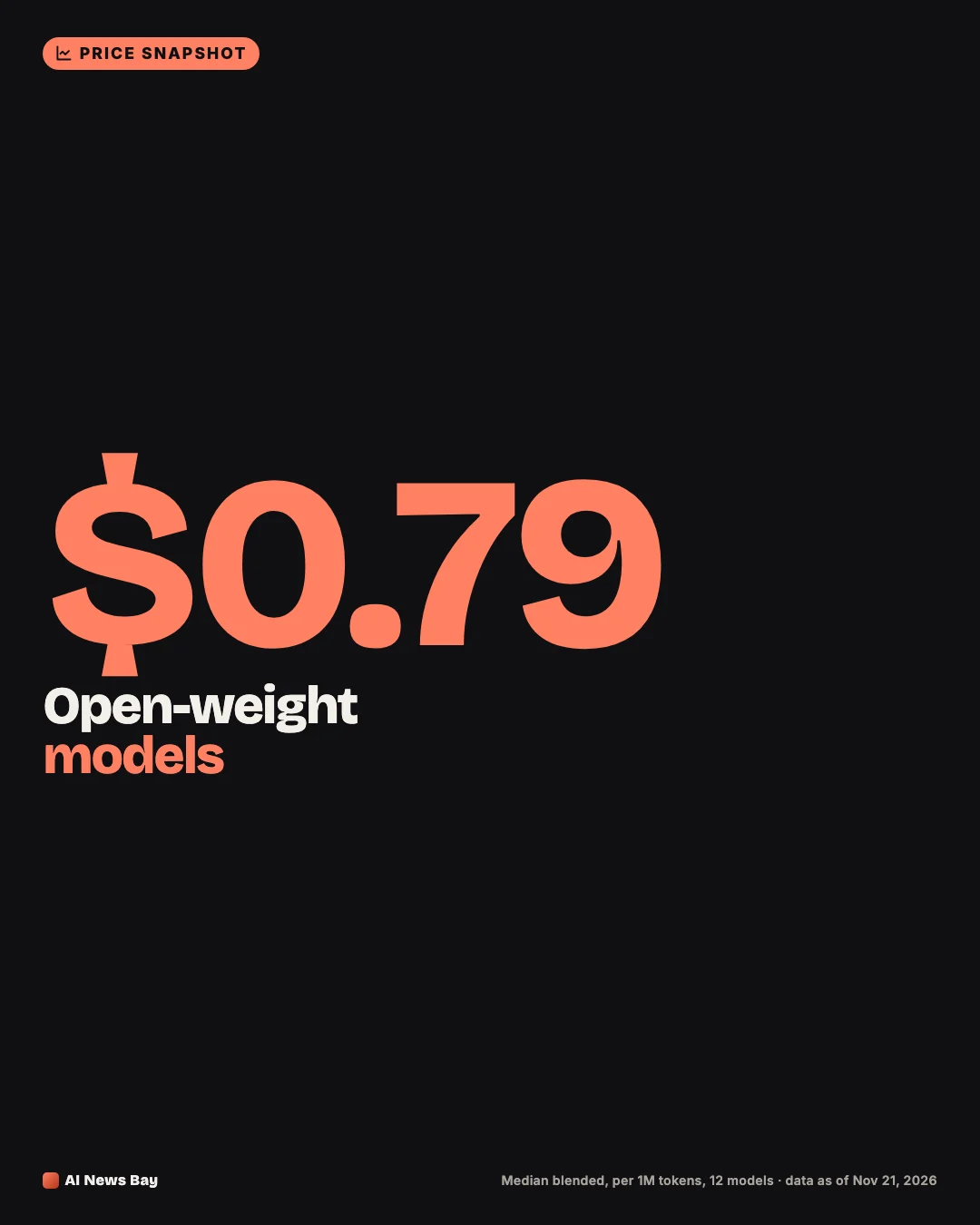
Twelve of the 42 models are open-weight, meaning their trained weights are published. All of them come from Mistral AI, DeepSeek, Moonshot AI, Z.ai and MiniMax.
| Group | Models | Median input | Median output | Median blended |
|---|---|---|---|---|
| Open-weight | 12 | $0.50 | $1.65 | $0.79 |
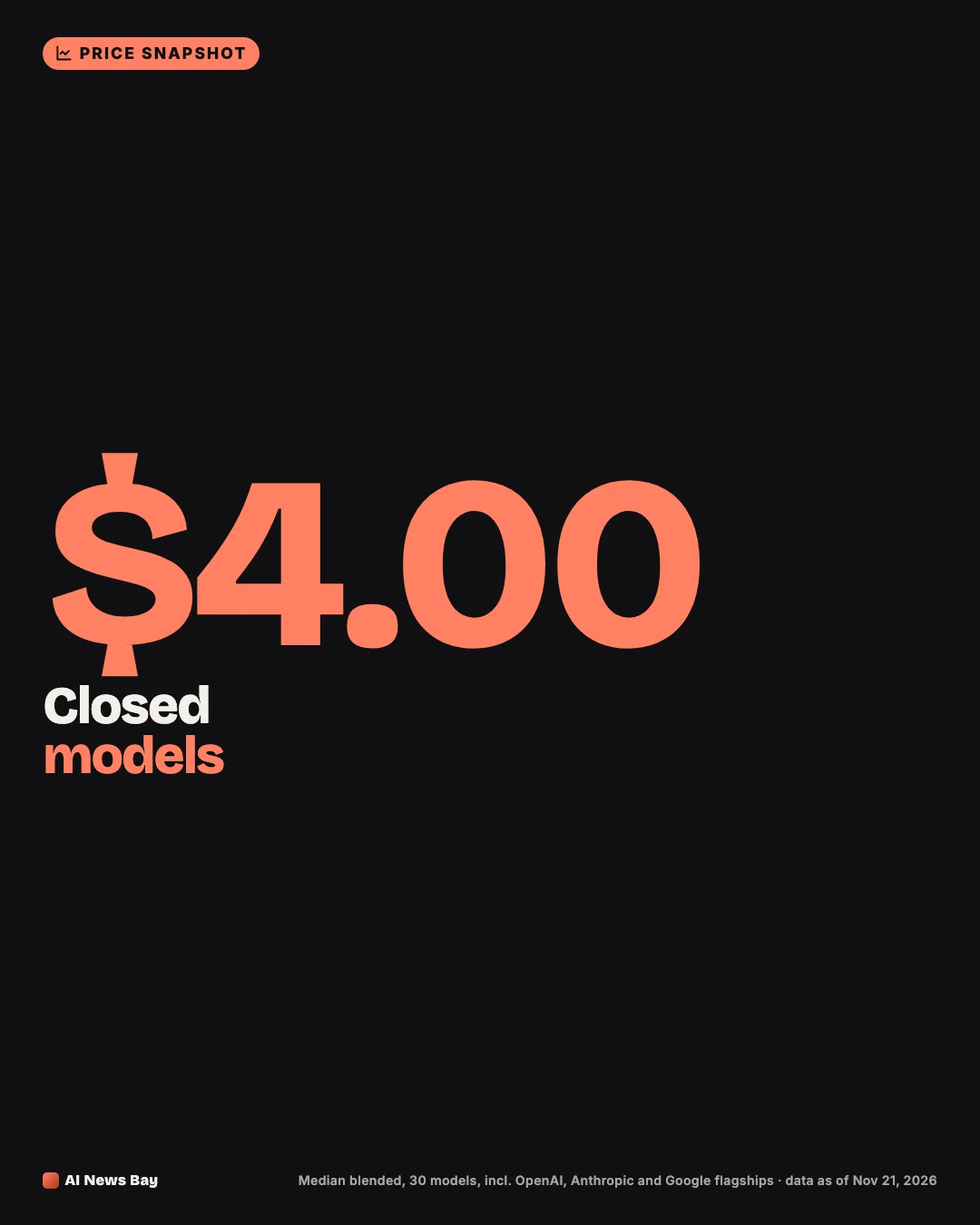
| Closed | 30 | $2.00 | $10.00 | $4.00 |
Correction, 2026-11-22: our board’s open-weight flags were updated against the makers’ own pages (Mistral Large 4 is open-weight; GLM-5.3-FlashX is not), and the medians above reflect that. The closed group includes every flagship from OpenAI, Anthropic and Google, so this isn’t a like-for-like quality comparison. It does show that the low end of the market is crowded with open-weight options.
Caching Is Nearly Universal
39 of the 42 models list a cached-input price, for repeated prompt text served from the provider’s cache. The three without one on our board are Mistral Small 4, Ministral 3 14B and Codestral 25.08. Among the 39, the cached price is typically 90% below normal input. The savings range from about 75% to 98% off.
Correction, 2026-11-22: an earlier version said 38 of 42 models listed a cached price and named Grok 4.7 among those without one. Our board now shows Grok 4.7’s cached input at $0.50 per 1M tokens, as on xAI’s pricing page, so the count is 39 and the low end of the savings range is 75%.
A Young Market
Using models.dev release dates, 23 of the 42 models were released in the 90 days before this snapshot, from late August 2026 onward. Three of them came out in the week before it: GPT-6.2 Astra, GPT-6.2 Sol and Gemini 4 Neon. Prices on a board this new will keep moving as older models are retired and newer ones arrive.
Timeline: Changes Already Announced
The official pricing pages behind our board already list these changes, as read on 2026-11-21:
| Model | What changes | When |
|---|---|---|
| GPT-5.6 Sol | OpenAI says its promotional pricing is available until 2026-11-30 | After 2026-11-30 |
| Gemini 4 Carbon and Gemini 4 Argon | Standard price rises from $2 / $10 to $4 / $20 per 1M input / output tokens | 2026-12-01 |
| Gemini 3.8 Flash | Standard price rises from $0.75 / $3.75 to $1.50 / $7.50 | 2027-01-01 |
| Gemini 2.5 Pro | Retires; Google says its API requests then go to Gemini 3.8 Flash, billed at Gemini 3.8 Flash rates (read on 2026-11-22) | 2026-12-01 |
| Kimi K2.7 Code | Moonshot AI says the K2 series closed to new users on 2026-10-31 and will be retired by the end of December 2026 | December 2026 |
Our board records every change with its date. Our board showed no price changes in the 30 days before this snapshot. That isn’t surprising, because our price history started in November 2026. Next month’s snapshot will be the first with a full month of history.
What to Watch in December
- Whether the announced Gemini increases take effect on 2026-12-01 as listed.
- What happens to GPT-5.6 Sol’s price after its promotion ends on 2026-11-30.
- New releases: with 23 models arriving in 90 days, more launches look likely (our analysis), and each new model can shift the board’s medians.
- The open-weight gap: whether closed providers lower their small-model prices toward the open-weight median.
What This Means for You
- Developers: check whether a model you use has an announced change (see the timeline above) and re-run your cost estimate before it lands.
- Founders and team leads: the low end of the market is crowded and cheap; test whether a model under $1 blended is good enough before paying for a flagship.
- Curious beginners: prices are quoted per million tokens, which is roughly 750,000 words, so a typical question costs a tiny fraction of a cent.
Copy-Ready Budget Check
- Note the model(s) you use and today’s price from the price board
- Check the timeline above for announced changes
- Re-price your monthly tokens on one cheaper alternative
- Put a reminder in your calendar for next month’s snapshot
If your main model doubled its price tomorrow, which alternative would you test first?
Bottom Line
In November 2026, a typical AI model on our board cost $1.75 per 1M input tokens and $8.75 per 1M output tokens. Prices span about 100 times from cheapest to dearest, and open-weight models sit mostly at the low end. Some changes are already scheduled for December and January. Check the live price board before you budget, and download the CSV if you want to run your own numbers.
Next, see worked examples in What Does One AI API Request Cost?. Want these updates by email? Sign up here, or follow new guides and data stories through our RSS feed.