You open OpenAI’s pricing page to check one number and find five speed modes, two context lengths and two cache-write prices. Here’s the whole menu, laid out so you can find your line in a minute.
The 12 OpenAI Models on Our Board
Standard prices per 1 million tokens, as recorded on our price board from OpenAI’s official pricing page on 2026-11-21, sorted by input price:
| Model | Input | Output | Cached input |
|---|---|---|---|
| GPT-6 Luna | $0.10 | $0.50 | $0.01 |
| GPT-5.6 Luna | $0.20 | $1.20 | $0.02 |
| GPT-6.1 Terra | $1.00 | $5.00 | $0.05 |
| GPT-6 Sol | $2.00 | $10.00 | $0.20 |
| GPT-6.1 Sol | $2.00 | $10.00 | $0.10 |
| GPT-6.2 Sol | $2.00 | $10.00 | $0.10 |
| GPT-5.6 Terra | $2.00 | $12.00 | $0.20 |
| GPT-5.4 | $2.50 | $15.00 | $0.25 |
| GPT-5.6 Sol | $4.00 | $20.00 | $0.40 |
| GPT-5.5 | $5.00 | $30.00 | $0.50 |
| GPT-6.2 Astra | $8.00 | $40.00 | $0.40 |
| GPT-6 Astra | $10.00 | $50.00 | $1.00 |
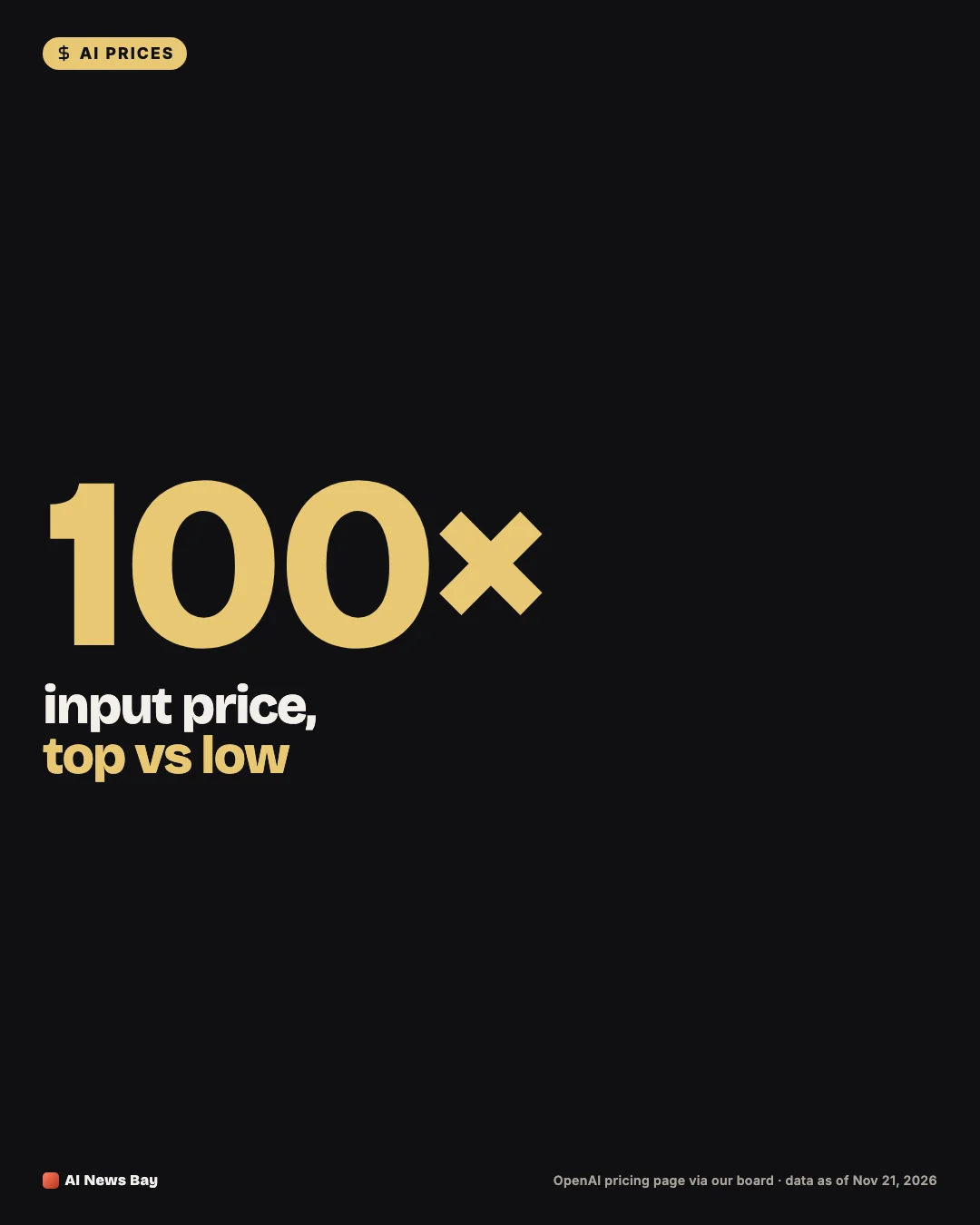
Did you know? The most expensive model on this list costs 100 times as much per input token as the cheapest: $10 against $0.10.
Judging by the prices (our reading, not OpenAI’s wording), the names follow a pattern: Luna models are the low-cost tier, Terra sits in the middle, Sol is the mid-to-upper tier and Astra is the most expensive. Version numbers tell you the generation, so GPT-6.2 Sol is newer than GPT-6.1 Sol at the same price.
Five Ways to Pay for the Same Model
OpenAI’s pricing page lists the same models under several speed and service options. Taking GPT-6.2 Sol as the example:
| Option | Input | Output | What it means |
|---|---|---|---|
| Standard | $2.00 | $10.00 | The normal price |
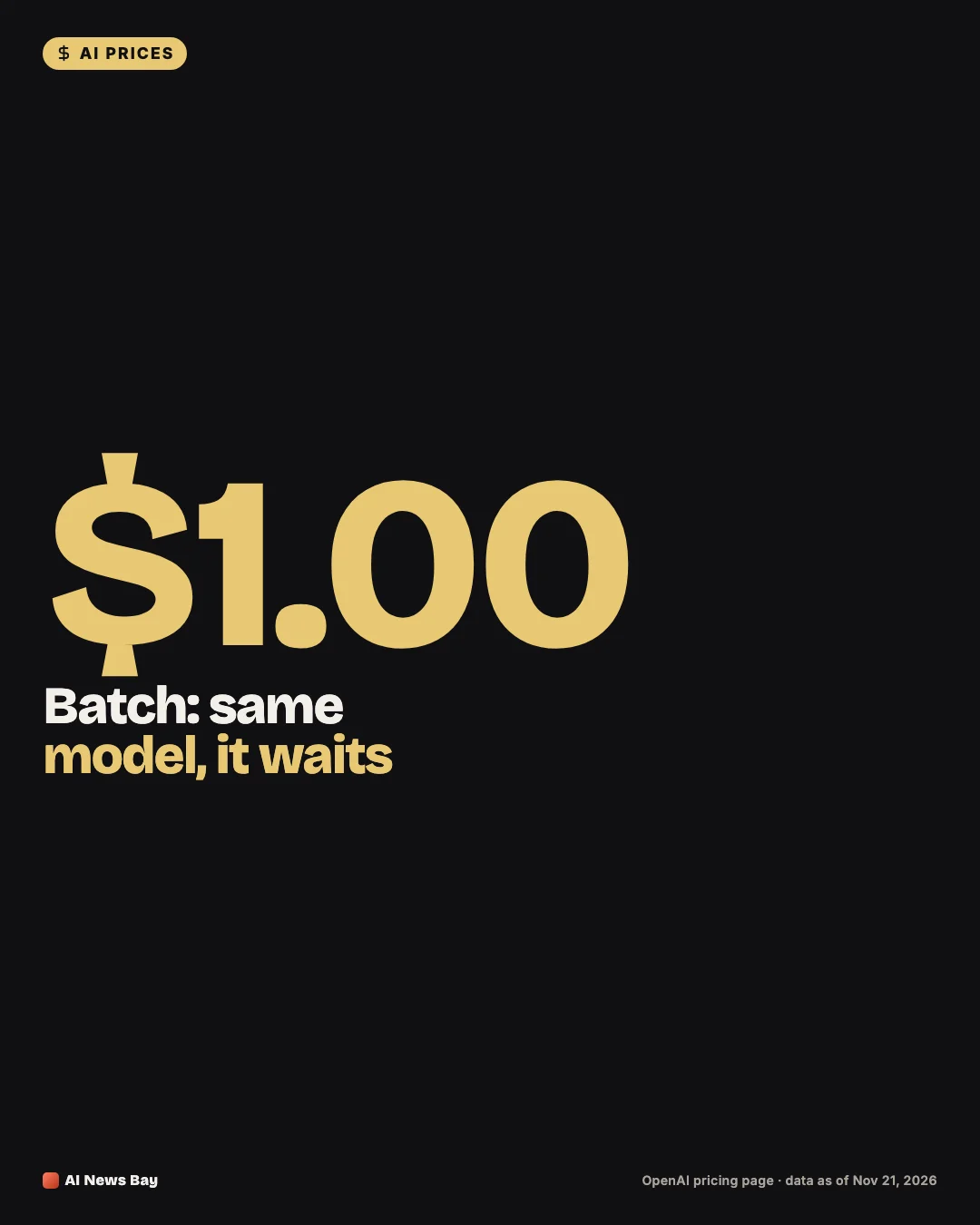
| Batch | $1.00 | $5.00 | Half price; for jobs that can wait |
| Fast | $4.00 | $20.00 | Twice the standard price for faster processing |
| Ultrafast | $6.00 | $30.00 | Three times standard through 2027-02-28 |
- Flex (beta): the page lists it for some models, including GPT-6 Astra and GPT-6 Luna, at the same price as Batch. It says Flex won’t be added to new models and that a retirement date will follow.
- Fast mode: the page notes this was called Priority processing until it was renamed on 2026-07-30.
- Ultrafast: the page says that for GPT-6.2 Astra and GPT-6.2 Sol it costs 3 times the standard rate through 2027-02-28 and 6 times from 2027-03-01.
Long Prompts Cost More
Our board records a higher long-context price for OpenAI’s current models once a prompt passes 272,000 input tokens. For GPT-6.2 Sol, input goes from $2 to $4 per 1M tokens and output from $10 to $15. For GPT-6 Luna, input goes from $0.10 to $0.20. If your prompts are near that line, trimming them can halve the input price.
Prompt Caching: Reads Are Cheap, Writes Cost Extra
When many requests start with the same long text, OpenAI can serve that part from a cache:
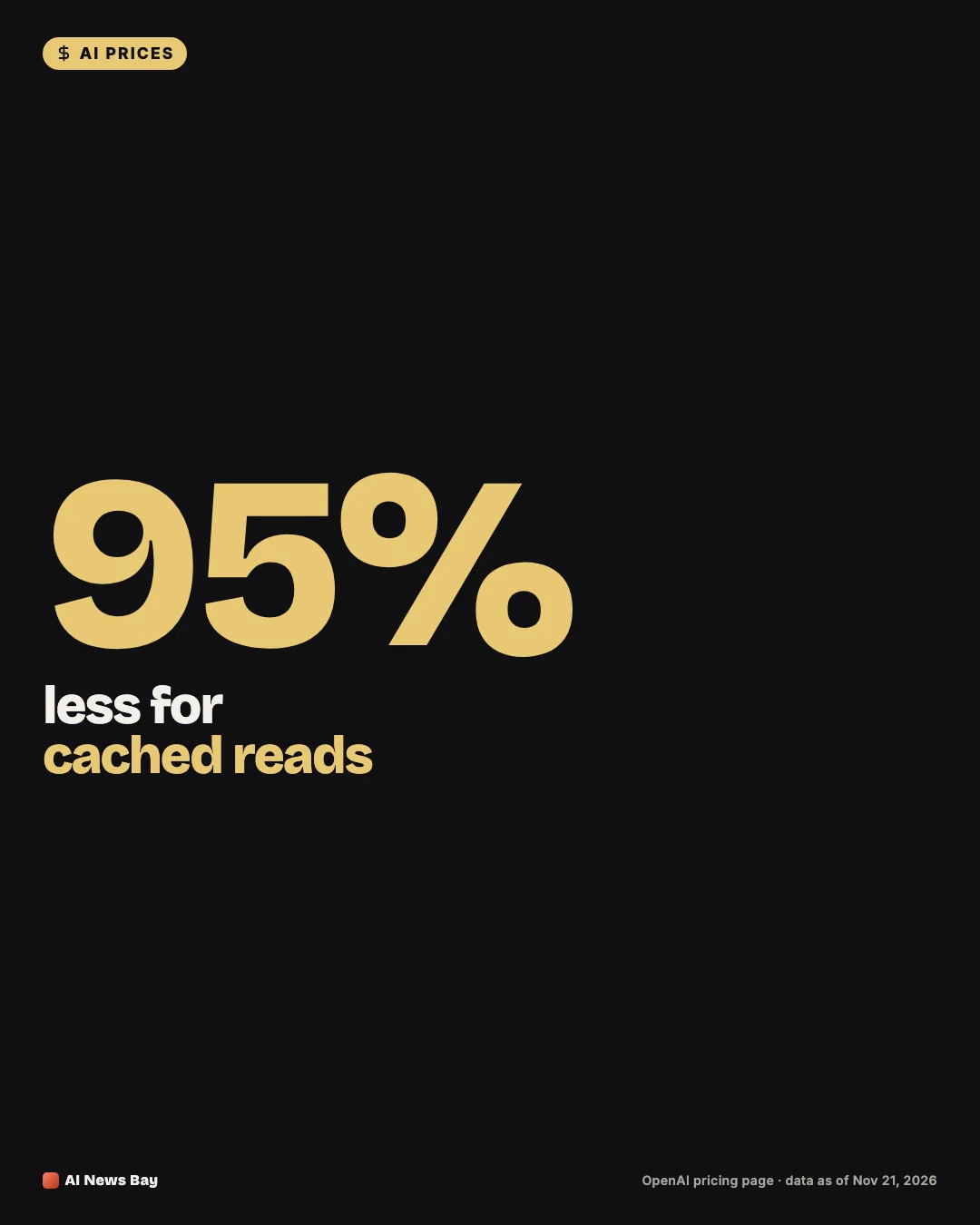
- Cached reads are much cheaper. For GPT-6.2 Sol, cached input is $0.10 against $2 for normal input, 95% less.
- Cache writes have their own prices, for a 30-minute or a 12-hour cache. For GPT-6.2 Sol the page lists $2.50 and $5.00 per 1M tokens, which is 1.25 and 2.5 times the normal input price.
Caching pays off when a large, fixed prompt is reused many times within the cache’s lifetime. Put the fixed part first and the changing part (the user’s question) last.
Other Price Lines to Know
- Background requests: on four models (GPT-6 Luna, GPT-6.1 Terra, GPT-6.2 Sol and GPT-6.2 Astra), OpenAI lists a discount for eligible requests run in the background: 30% off if they can finish within 2 hours, 40% off within 8 hours.
- Regional processing: data-residency endpoints cost 10% more for models released on or after 2026-03-05, and FedRAMP endpoints also cost 10% more.
- Promotions: the page says GPT-5.6 Sol’s promotional pricing runs until 2026-11-30.
- Reasoning: OpenAI’s reasoning guide explains that hidden reasoning tokens are billed as output, so set the reasoning effort as low as your task allows.
A Worked Example
A support bot sends 1,000 requests a day, each with 3,000 input tokens and 400 output tokens, over 30 days:
| Model and option | Per day | Per month |
|---|---|---|
| GPT-6 Luna, standard | $0.50 | $15 |
| GPT-6.1 Terra, standard | $5.00 | $150 |
| GPT-6.2 Sol, standard | $10.00 | $300 |
| GPT-6.2 Sol, with 2,500 tokens cached | $5.25 | about $158 |
| GPT-6.2 Sol, Batch (if answers can wait) | $5.00 | $150 |
| GPT-6.2 Sol, Fast | $20.00 | $600 |
| GPT-6.2 Astra, standard | $40.00 | $1,200 |
The caching line ignores the occasional cache write. Picking the right model and option moves the bill by up to 80 times in this example, from $15 to $1,200 a month. Our article What Does One AI API Request Cost? explains the formula.
Myth vs Fact
| Myth | Fact |
|---|---|
| Fast mode makes a model smarter | It’s the same model at twice the price, for speed |
| Batch is a different, weaker model | It’s the same model, billed at half price because it can wait |
| Caching is free | Cached reads are cheap, but cache writes are billed above the normal input price |
What This Means for You
- Developers: start on GPT-6 Luna or GPT-6.1 Terra for simple tasks, cache your system prompt, and move offline jobs to Batch.
- Founders and team leads: the same model can cost 2 to 6 times more in Fast or Ultrafast mode; decide which features truly need that speed.
- Curious beginners: OpenAI sells many sizes of model at very different prices, and most small tasks don’t need the biggest one.
Copy-Ready OpenAI Cost Check
- Which model tier do I need: Luna, Terra, Sol or Astra?
- Are my prompts under 272,000 input tokens?
- Is my fixed system prompt first, so it can be cached?
- Can any jobs move to Batch or background requests?
- Am I paying for Fast mode where standard speed is fine?
- Have I checked for promotions ending soon?
Which of these could you check on your own bill this week?
Bottom Line
OpenAI’s API prices span about 100 times from GPT-6 Luna to GPT-6 Astra, and the same model can cost half as much in Batch or six times as much in Ultrafast. Pick the smallest tier that does the job, cache what repeats, and batch what can wait. Compare OpenAI with other providers on our price board, read our guide How LLM API Pricing Works, and check OpenAI’s posted incidents on our OpenAI status page. Want these updates by email? Sign up here, or follow new guides and data stories through our RSS feed.